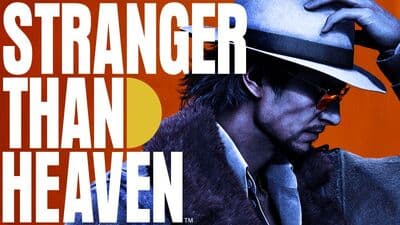
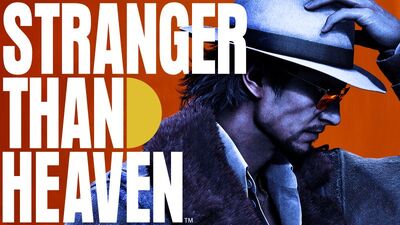
RGG Studio's Stranger Than Heaven follows one Japanese-American outcast across 50 years and five cities. Winter 2026. Here is why this is unlike anything the studio has made before.
Makoto Daito does not belong anywhere when the story begins. He is a Japanese-American boy in 1915 San Francisco who has already learned that the country of his birth has no room for who he is. So he does the only thing left to him. He sneaks aboard a smuggler's ship in the middle of the night and sails toward a country he has never seen, hoping that being Japanese will finally mean something somewhere.
Japan does not welcome him either. Not at first. Not easily. What Stranger Than Heaven builds across fifty years and five cities is the story of what a person becomes when they decide that if the world will not accept them as they are, they will become something the world cannot ignore.
That is not a Yakuza game premise. It is a grander, older, more literary ambition than RGG Studio has ever announced before, and the fact that it comes from the same studio that made Ichiban Kasuga sell cabbages to survive says something about how much range is sitting inside that team.
Five Cities, One Life
The structure is the most unusual thing about Stranger Than Heaven before you even get to the gameplay. Most games give you one protagonist in one time period. This one gives you Makoto Daito in 1915 Kokura, 1929 Kure, 1943 Minami Osaka, 1951 Atami, and 1965 Kamurocho, the fictional Tokyo district that has been the heart of the entire Like a Dragon universe across every game since the original.
Kamurocho in 1965 is fifty years before the modern games. Walking its streets in that era means walking through the city before it became the city. The bars, the alleyways, the specific geography that longtime fans have memorised across decades of games existed as something younger and rougher in the postwar decade. For anyone who has spent hundreds of hours in that district across multiple games, arriving there in 1965 with Makoto is going to feel like seeing a photograph of a place you know well taken before you were born.
Each city is built on real historical locations. The Kokura of 1915 was one of Japan's great foundry cities, firelit and industrial. Kure in 1929 was a naval town, tightly controlled and economically specific. The five locations carry distinct identities shaped by what Japan was actually going through in each era, from prewar industrialisation through militarism and into postwar reconstruction. RGG Studio's research teams built the Kokura level in two to three months before the game was even publicly announced, which explains why the studio director was confident enough to reveal it at The Game Awards 2024 under the code name Project Century.
The Showman Nobody Expected
Here is the part most other coverage either buries or skips past entirely: Makoto Daito becomes a showman. Not a gangster who moonlights in entertainment. Not a fighter who also happens to put on performances. A genuine, working showman who scouts performers, composes original music, designs productions, arranges lighting, assigns cast members, and builds shows from nothing into spectacles that define the era he is living through.
The music creation system goes further than any minigame in the studio's history. Makoto collects sounds from the world around him: brooms sweeping, trains rumbling, animals crying, the specific grunts enemies make when he hits them hard enough. Those sounds become the raw material for original compositions. The show itself requires decisions about setlists, staging, band arrangements, and production choices that accumulate into a performance the game renders as a real event rather than a cutscene.
This is the same studio that let Kiryu manage a cabaret club, run a batting cage, become a professional baseball player, manage a real estate empire, and raise a child across multiple games. RGG Studio has always treated its diversions as fully realised parallel lives rather than checkbox side content. The showman system in Stranger Than Heaven reads like everything they learned from decades of making that work, applied to something with genuine narrative stakes rather than optional entertainment.
The Ghost in the Cast List
Snoop Dogg plays the smuggler whose ship Makoto boards in 1915. That sentence exists and is real. His character arrives in San Francisco, owns the vessel that carries Makoto's future, and apparently shapes the early chapters in ways the studio has not fully revealed yet. The casting is the kind of creative decision that only makes sense if you have watched RGG Studio hire Beat Takeshi, Goro Kishitani, and other icons of Japanese film and television across their games for years. They cast performers who carry specific cultural weight and then build characters that use that weight meaningfully.
The late actor Bunta Sugawara also appears, his family having granted Sega permission to use his likeness. Sugawara was one of the defining faces of Japanese yakuza cinema. Having his image in a game about the fifty-year history of the world that eventually became the Like a Dragon universe is not a cameo. It is a lineage being acknowledged.
Winter 2026, Game Pass Day One
Stranger Than Heaven launches winter 2026 on PS5, Xbox Series X and S, and PC. It is confirmed day one on Xbox Game Pass. No exact date inside that window exists yet. Given that Xbox dedicated an entire standalone showcase to the game in May 2026, the marketing campaign is clearly treating this as one of the year's headline releases rather than a late-year surprise.
Most other articles about this game will tell you it is a Yakuza prequel with five eras and Snoop Dogg in it. That is accurate and completely misses what makes it interesting. This is a story about a man who was rejected by two countries and responded by building something that neither could ignore. The fifty years are not a gimmick. They are the only way to tell it honestly.

Written by
kio
Hello, good to see you here.❤️
daddykio@proton.me
Stay in the loop
Get the latest gaming news and reviews delivered to your inbox. No spam, unsubscribe anytime.