Saros launched April 30, 2026 on PS5 with an 88 on Metacritic. Here is whether Housemarque's Returnal follow-up lives up to the legacy.
Returnal came out in 2021 and split its audience cleanly down the middle. One half found it one of the most exhilarating games ever made. The other found its difficulty wall too unforgiving to push through. Housemarque spent the next five years building Saros, and the most deliberate decision they made was figuring out how to keep everything that made Returnal exceptional while removing the specific friction that kept half the audience outside looking in.
The result landed April 30, 2026 with an 88 on Metacritic, a 9.25 from Game Informer, a 9 from GameSpot, and 96 percent of critics recommending it on OpenCritic. That is not a game that compromised its identity to chase a wider audience. That is a game that found a smarter way to be itself.
The Planet of Carcosa
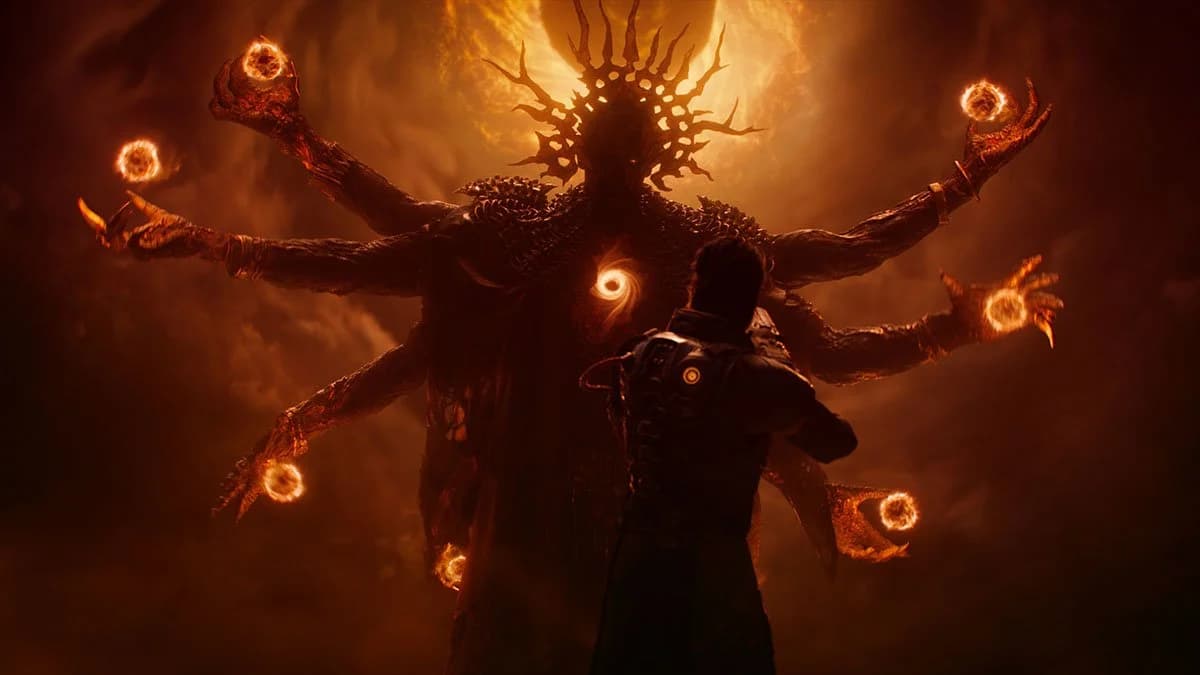
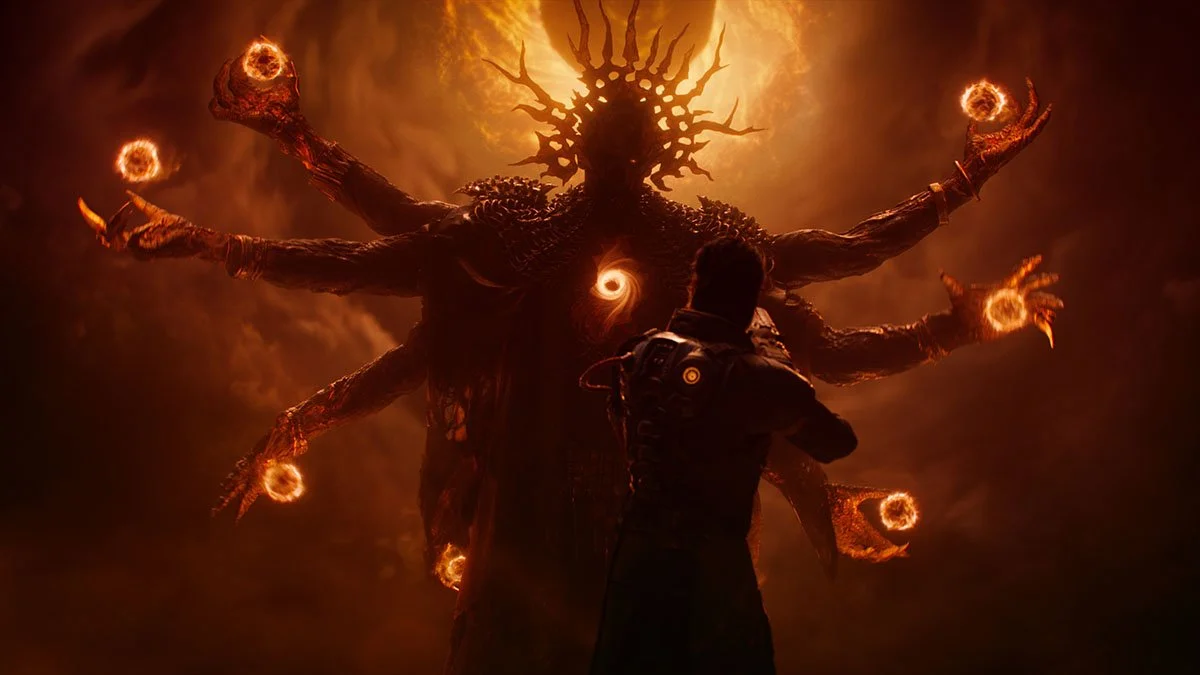
You play as Arjun Devraj, a Soltari Enforcer whose rescue mission to the planet Carcosa goes wrong almost immediately. Carcosa is being swallowed by a permanent eclipse that reshapes the planet continuously, and the corporation that sent Arjun there, Soltari, has interests in what is happening that his mission briefing did not mention. The loop begins. He dies. He returns. The planet shifts around him each time.
The setting draws on cosmic horror tradition in ways that feel considered rather than decorative. Carcosa as a name comes from the same literary tradition that inspired True Detective, and the game uses that mythology to build a world that feels genuinely wrong in ways that go deeper than visual design. The eclipse is not just an aesthetic choice. It is a narrative engine that explains why the world never resolves, why the same spaces feel different each run, and why Arjun's understanding of what is actually happening builds slowly across deaths rather than revealing itself cleanly.
Rahul Kohli voices Arjun, and the casting matters. Kohli brings a specific quality to the role, grounded and human in ways that stop the cosmic horror from becoming abstract. When Arjun reacts to what Carcosa keeps showing him, it feels personal rather than performed.
What Changed From Returnal
The permanent progression system is the structural shift that opens Saros to a wider player base without lowering the ceiling for experienced roguelike players. In Returnal, progress between runs was limited. Dying meant returning to almost nothing. Saros introduces meaningful permanent upgrades that carry across deaths, building Arjun's capabilities in ways that accumulate over sessions rather than resetting.
This does not make the game easy. The difficulty is still real, the bullet patterns are still demanding, and the boss encounters still require genuine skill to read and respond to. What it removes is the specific hopelessness of feeling like time spent is time lost. Progress is visible. The run that ends in death still moved you forward. That distinction changes how the game feels emotionally even when the gameplay moment to moment is just as intense.
The shield mechanic is the new combat tool that defines Saros's identity most clearly. Arjun can absorb certain enemy projectiles with his shield, converting them into energy that powers his weapons. This creates a risk and reward rhythm where the most aggressive defensive play generates the strongest offensive output. Standing still and playing safely is always the worse option. The shield system punishes caution and rewards the kind of forward momentum the game is built around.
Where Critics Split
The 88 Metacritic score hides a real division in how reviewers responded to the story. The gameplay side drew near-universal praise. The narrative is where opinions separated. Some found the abstract worldbuilding and the slow reveal of Carcosa's true nature compelling and rewarding across a full playthrough. Others found the supporting cast underdeveloped, present as plot mechanisms for Arjun's journey rather than characters with their own weight.
That criticism is accurate. The world is more interesting than the people in it, and for a game building toward prestige PlayStation storytelling that gap is noticeable. The mysteries Carcosa poses are genuinely engaging. The answers are satisfying enough. The emotional investment the story asks for through its characters does not always arrive.
The gameplay does not need the story to work. It is, as one reviewer put it, an unequivocal joy from start to finish regardless of how much the narrative lands for any individual player.
Who It Is For
Players who loved Returnal but bounced off its difficulty will find Saros the version of that experience they were looking for. Players who completed Returnal multiple times will find Saros slightly more forgiving but no less technically demanding at its ceiling. New players arriving without Returnal experience will need a few hours before the systems click, but the permanent progression means those hours are never wasted.
PS5 exclusive. Available now.

Written by
kio
Hello, good to see you here.❤️
daddykio@proton.me
Stay in the loop
Get the latest gaming news and reviews delivered to your inbox. No spam, unsubscribe anytime.