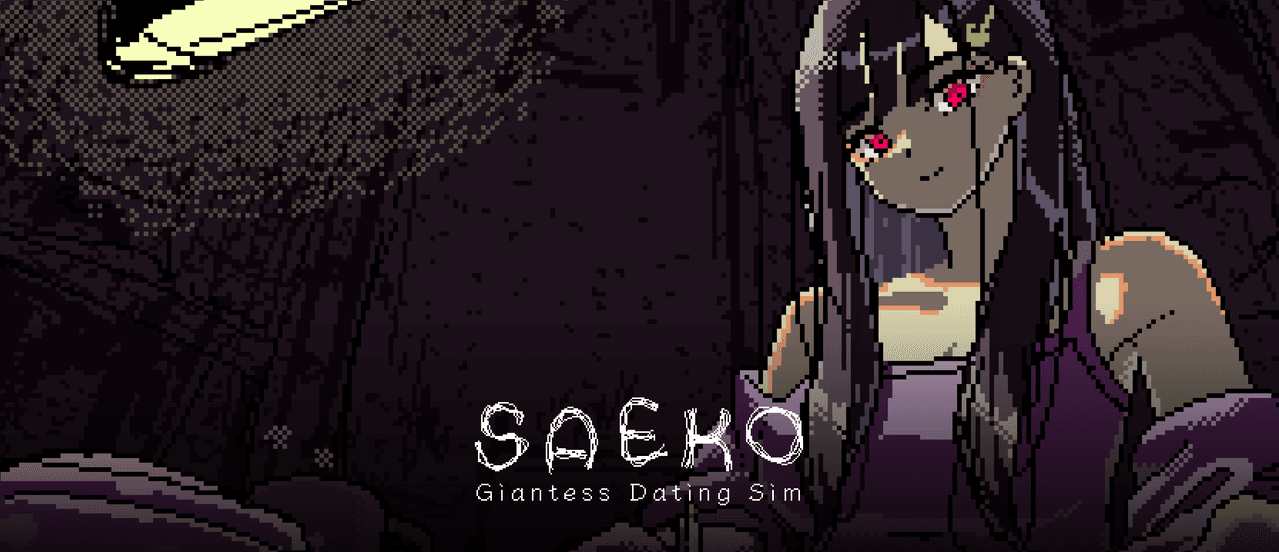
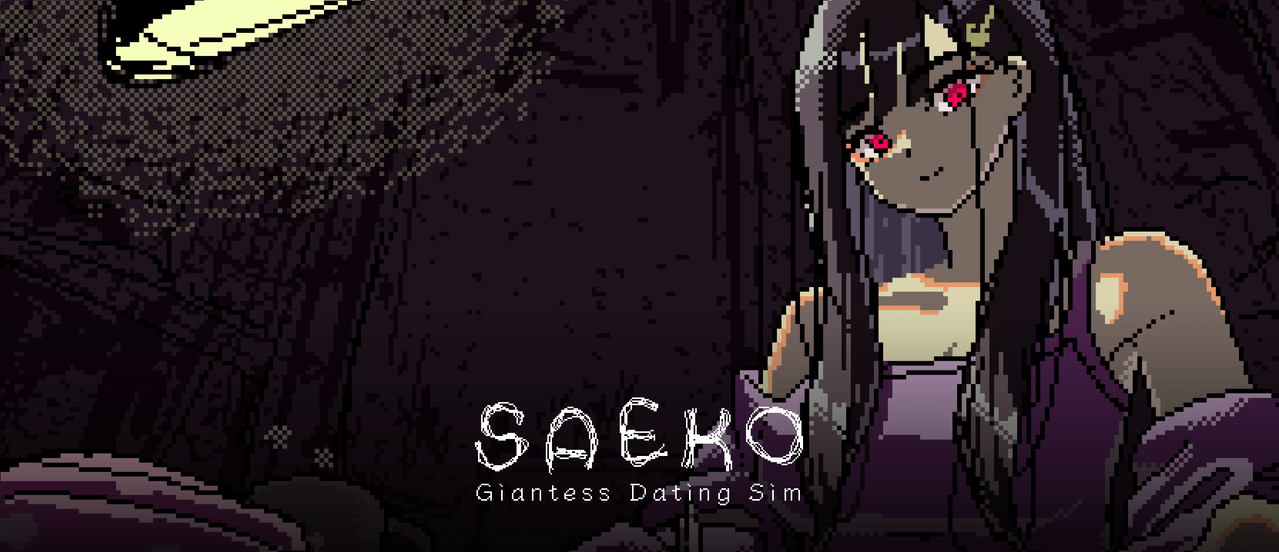
SAEKO Giantess Dating Sim launches on Nintendo Switch June 25, 2026. It is a psychological horror visual novel set in 2000s Japan and it is stranger than the title suggests.
The title does a lot of work before you even click anything. SAEKO: Giantess Dating Sim announces itself with a concept so specific that most people's first reaction is either immediate curiosity or an instinct to move on. Both responses are understandable. What neither response accounts for is that the game underneath that title is a genuinely unsettling piece of psychological horror with a level of craft that nobody saw coming from a small indie studio based in Kyoto and Tokyo.
The game released on PC in May 2025, found an audience, and is now coming to Nintendo Switch digitally on June 25, 2026, with a physical Colossal Edition arriving August 27, 2026 in North America through Serenity Forge. The publisher behind Doki Doki Literature Club Plus and LISA picking this up for physical distribution tells you something about who recognises what SAEKO actually is beneath its surface.
What Happens When You Wake Up
You play as Rin, a young man who blacks out while walking through the streets of 2000s Japan and wakes up miniaturised, roughly the size of a thumb, staring up at an enormous woman named Saeko. She is beautiful, composed, and deeply dangerous. She has been shrinking people for reasons the game reveals slowly and uncomfortably across its runtime.
Rin is placed in Saeko's desk drawer alongside other miniature captives, a small colony of tiny people living entirely at her mercy. He is appointed their supervisor, responsible for managing resources, resolving conflicts between the other captives, and most critically, navigating his daily interactions with Saeko herself without making a wrong move.
The wrong moves are lethal. Answer incorrectly. Take too long to respond. Push back too many times in a single conversation. Saeko's patience has limits, and exceeding them ends the run. The game is structured around learning her boundaries well enough to survive, which means learning her psychology well enough to predict what she wants rather than what she says.
Two Game Systems, Two Visual Identities
The day and night structure divides SAEKO into two distinct gameplay modes with two completely different art styles, and the shift between them is one of the more striking design choices in recent visual novel history.
Daytime runs in a detailed pixel art style. You manage the colony, distribute items among the captives, handle the relationships between them, and prepare for your daily conversation with Saeko. Each captive has two status bars that must be maintained. Neglect them and the colony destabilises, which feeds into the night section in ways that compound.
Night switches to a different visual language entirely, darker and more stylised. Rin uses a feature phone to access story-relevant news, read a web novel that adds context to the world around Saeko's apartment, and play a minigame. The feature phone as the central night object is a small detail that grounds the 2000s Japan setting more effectively than any amount of environmental description could. Anyone who lived through that era of Japanese mobile culture will recognise what it feels like immediately.
The soundtrack, composed by the developer and heavily influenced by future garage and breakcore, holds both halves together. It is one of the more memorable original soundtracks in recent indie games and the Colossal Edition includes a download card for it specifically because enough people asked.
What the Game Is Really About
SAEKO draws from a specific tradition of Japanese horror fiction centred on the uncanny and the domestic. The developer cited the work of Fueti Shizue as an influence, and that lineage is visible in how the game constructs dread. Nothing in SAEKO's world announces itself as obviously monstrous. Saeko is charming. The drawer is warm. The dynamic between captor and captive is presented with a disturbing normality that makes the horror accumulate slowly rather than arriving in shocks.
The game is rated M for Mature. It does not shy away from where its premise leads, and players who engage with it expecting a conventional horror structure will find something more psychologically layered and more interested in complicity than in jump scares.
The physical Colossal Edition includes character standees, a holographic sticker, and the soundtrack download card at USD 44.99. The limited Japanese physical edition goes considerably further with an art book, soundtrack CD, Saeko's hairclip, and a special box designed to look like her drawer.
For a game about being trapped in a piece of furniture, the packaging choices are remarkably on theme.

Written by
kio
Hello, good to see you here.❤️
daddykio@proton.me
Stay in the loop
Get the latest gaming news and reviews delivered to your inbox. No spam, unsubscribe anytime.