Nvidia just announced RTX Spark laptops for fall 2026 but who actually needs one? Here is an honest look at who should buy it and who should skip it entirely.
A new chip gets announced. The spec numbers are enormous. The stock market panics. Intel drops six percent. Qualcomm loses ten. Everyone agrees something significant just happened. And then the obvious question nobody in the press conference room asks out loud: okay but who is actually going to buy this thing?
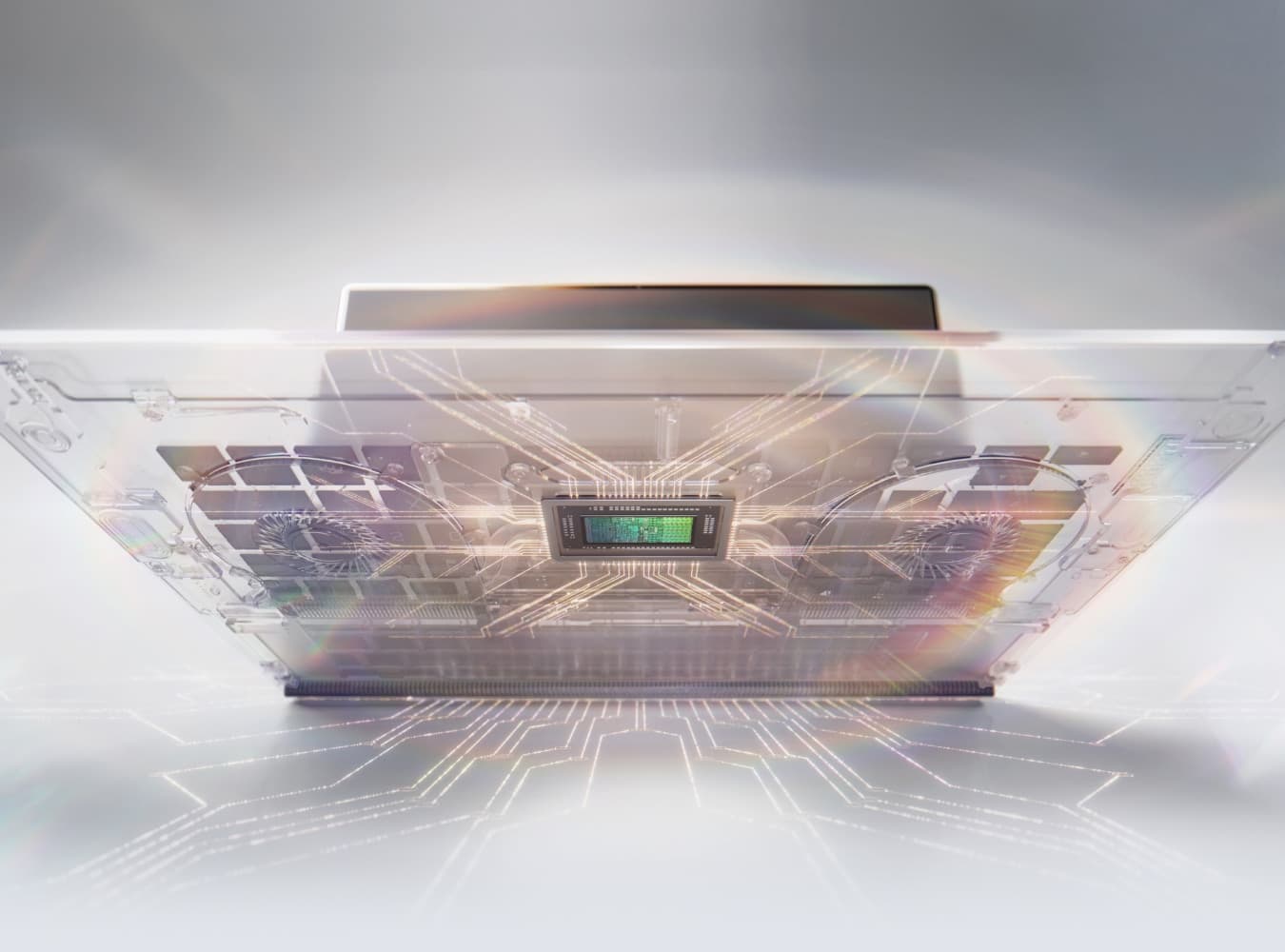
RTX Spark is Nvidia's first ever PC chip, combining a CPU, GPU, and up to 128GB of unified memory onto a single piece of silicon inside a thin Windows laptop. It is arriving fall 2026 from Dell, Asus, MSI, HP, Lenovo, Microsoft, and others, starting somewhere above 1,500 dollars for the lower configurations and climbing significantly from there. The architecture is genuinely new. The price is genuinely high. The use case question is the one that actually matters.
If You Are a Gamer
The honest answer is that RTX Spark is not the gaming laptop you are probably looking for right now. A 1,500 dollar starting price for a platform with no independent benchmarks yet, running Windows on ARM where game compatibility is still a real conversation, is a hard sell when existing discrete GPU laptops at similar price points have proven performance and no compatibility questions attached.
The Blackwell GPU inside RTX Spark carries 6,144 CUDA cores, which puts it around RTX 5070 territory on paper. On paper is doing a lot of work in that sentence. Until someone outside Nvidia runs actual games through actual hardware under actual thermal conditions across a sustained gaming session, the frame rate numbers are projections rather than results. ARM-based Windows gaming has improved but the library gaps and emulation overhead for titles not natively compiled for ARM are real enough that early adopters will hit walls that a standard x86 gaming laptop simply does not have.
Wait for the first independent reviews. If the gaming performance holds up in real conditions and the compatibility list covers the titles you actually play, RTX Spark laptops become a serious option by early 2027. Right now the risk of being an early adopter is higher than the benefit.
If You Are a Creator
This is where RTX Spark makes the most immediate sense and where the unified memory architecture changes the conversation completely. Video editors, 3D artists, and motion graphics designers working with large project files have spent years managing the frustrating split between system RAM and GPU VRAM. A project that fits comfortably in 64GB of system memory hits a wall the moment it tries to push more than 16 or 24GB through the GPU for rendering.
RTX Spark eliminates that wall. The CPU and GPU share the same 128GB pool. A rendering job that would have required careful asset management on a traditional laptop just runs. The Asus ProArt P16 with a 4K 120Hz OLED display and 128GB unified memory is a genuinely compelling creative workstation in a chassis under four pounds. For someone billing by the hour on creative work, a machine that removes memory bottlenecks from the workflow has a calculable return on investment that justifies the premium price in a way that gaming alone cannot.
If You Are Running AI Workloads Locally
RTX Spark delivers one petaflop of AI performance. That number means running large language models, image generation pipelines, and AI-assisted tools locally on the device without sending data to a cloud server. For developers building AI applications, researchers testing models, or professionals working with sensitive data that cannot leave the device, this is the most significant capability RTX Spark offers that no competing laptop platform currently matches at this power envelope.
The enterprise version of the same chip, the DGX Spark, costs between 3,500 and 4,700 dollars. Consumer RTX Spark laptops bringing similar AI capability for less than half that price in a portable form factor represents genuine value for that specific use case. This is the audience RTX Spark was actually designed for first, and the gaming and creative positioning sits on top of that foundation rather than being the primary reason the chip exists.
If You Are an Everyday User
Skip it. A laptop starting above 1,500 dollars built around AI performance and unified memory architecture is solving problems that a 900 dollar machine handles fine for browsing, documents, video calls, and streaming. The premium goes entirely toward capabilities that require specific professional workflows to justify. Paying for one petaflop of AI compute to watch YouTube faster is not a use case.
The One Thing Everyone Should Wait For
Pricing announcements from OEM partners through July and August will determine whether RTX Spark laptops land in a range where the use case math works for more than enterprise buyers and high-end creative professionals. If the 128GB Asus ProArt P16 comes in at 2,500 dollars it is competitive. If it comes in at 3,500 it is a niche product regardless of what the specs say.
The second thing to wait for is battery life data under real workloads. A unified memory architecture on a 3nm chip should be efficient. Should is not a benchmark. Until someone publishes actual hours under sustained creative or gaming loads, the portability claim is a promise rather than a result.
Fall 2026 is when the answers arrive. The question of who RTX Spark is actually for gets a real answer the moment the first independent reviews hit.

Written by
kio
Hello, good to see you here.❤️
daddykio@proton.me
Stay in the loop
Get the latest gaming news and reviews delivered to your inbox. No spam, unsubscribe anytime.