Mafia The Old Country launched August 8, 2025 in 1900s Sicily with a linear story and a $50 price. Here is whether Hangar 13 brought the series back properly.
Nine years is a long gap between mainline Mafia games. Mafia 3 launched in 2016 to a complicated reception. Strong opening, repetitive structure, a story that deserved better mechanics around it. Hangar 13 spent nearly a decade figuring out what the series needed to be next, and the answer they landed on was not bigger. It was smaller, older, and more personal.
Mafia: The Old Country launched August 8, 2025, priced at fifty dollars instead of the standard seventy, set in early 1900s Sicily, and built around a single question: what does it actually cost a man to give himself to something completely?
Enzo Favara and the Torrisi Family
The protagonist is Enzo Favara, a man who begins the story breaking his back in the sulfur mines of San Celeste under conditions that leave him no future worth naming. When the opportunity to join the Torrisi crime family arrives, it is not presented as temptation. It is presented as the only door in a room with no windows.
Enzo takes the oath. He becomes a made man. The game then follows what that decision costs him across a story built around loyalty as both its highest virtue and its most dangerous trap. The Torrisi family demands everything and offers belonging in return, and Hangar 13 never lets the audience forget that those two things are not the same as freedom.
Enzo is voiced by Riccardo Frascari with a performance grounded enough that the character's internal conflict registers without requiring the script to constantly explain it. The supporting cast around him, Don Torrisi, the family's various lieutenants, the rivals and the civilians caught between them, are drawn with the same attention to period authenticity that defines every other element of the production.
Early 1900s Sicily as a Setting
San Celeste is fictional but the world surrounding it is not. Hangar 13 built their Sicily with visible research behind every detail. The architecture, the class structures, the way the Catholic Church and the Mafia operated in uncomfortable proximity, the specific texture of poverty and pride that defined southern Italian life in that era, all of it is present in ways that make the setting feel inhabited rather than constructed.
Horseback travel sits alongside early automobiles as the primary way of moving through the world. Both feel period-appropriate and both handle differently in ways that feed into the game's pacing. The landscape shifts between sun-baked agricultural land, cramped village streets, and coastal terrain. Sicily as a place has genuine character in this game rather than existing purely as backdrop for criminal activity.
The Linear Structure Is a Feature Not a Limitation
Hangar 13 made the decision to build The Old Country as a focused linear experience rather than an open world, and the developer commentary around that choice was direct: the story they wanted to tell required control over pacing that an open world structure would undermine.
That choice divides players predictably. Those who came expecting the sandbox freedom of other crime games found the linearity limiting. Players who valued the original Mafia's cinematic discipline found it exactly right. Steam reviews settled at very positive with praise for the story and consistent notes about the gameplay feeling restrained by the linear structure.
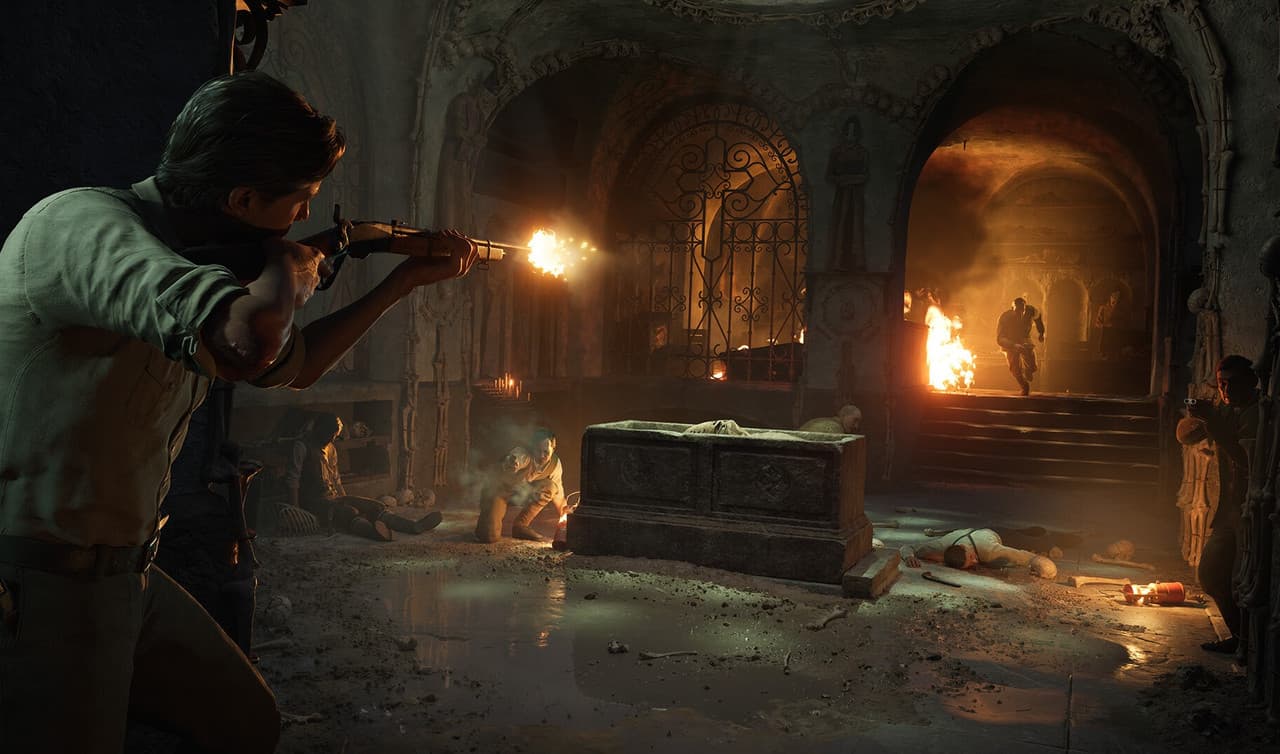
The combat mixes melee and gunplay across a range of era-appropriate weapons. Fistfights carry weight and consequence. Shootouts in narrow Sicilian streets feel genuinely tense given the limited cover options and the period-accurate firearms that require real aim rather than modern game accuracy assists. Neither system is the headline. The story is the headline and the combat serves it rather than competing with it.
The Fifty Dollar Question
Pricing a game at fifty dollars when the industry standard sits at seventy is a statement about scope. Hangar 13 and 2K made that statement openly: The Old Country is a focused, shorter experience and the price reflects that honestly rather than padding content to justify a higher number.
The campaign runs approximately ten to twelve hours depending on how thoroughly you explore. That runtime will feel too short for some and exactly right for others. What it contains across those hours is consistently well-crafted, emotionally grounded, and free of the filler that stretched Mafia 3 past its natural length.
For a series that needed to prove it still knew what it was, The Old Country made that case cleanly. Enzo's story is not the most ambitious thing Hangar 13 could have built. It is the most honest.
Available on PS5, Xbox Series X and S, and PC.

Written by
kio
Hello, good to see you here.❤️
daddykio@proton.me
Stay in the loop
Get the latest gaming news and reviews delivered to your inbox. No spam, unsubscribe anytime.