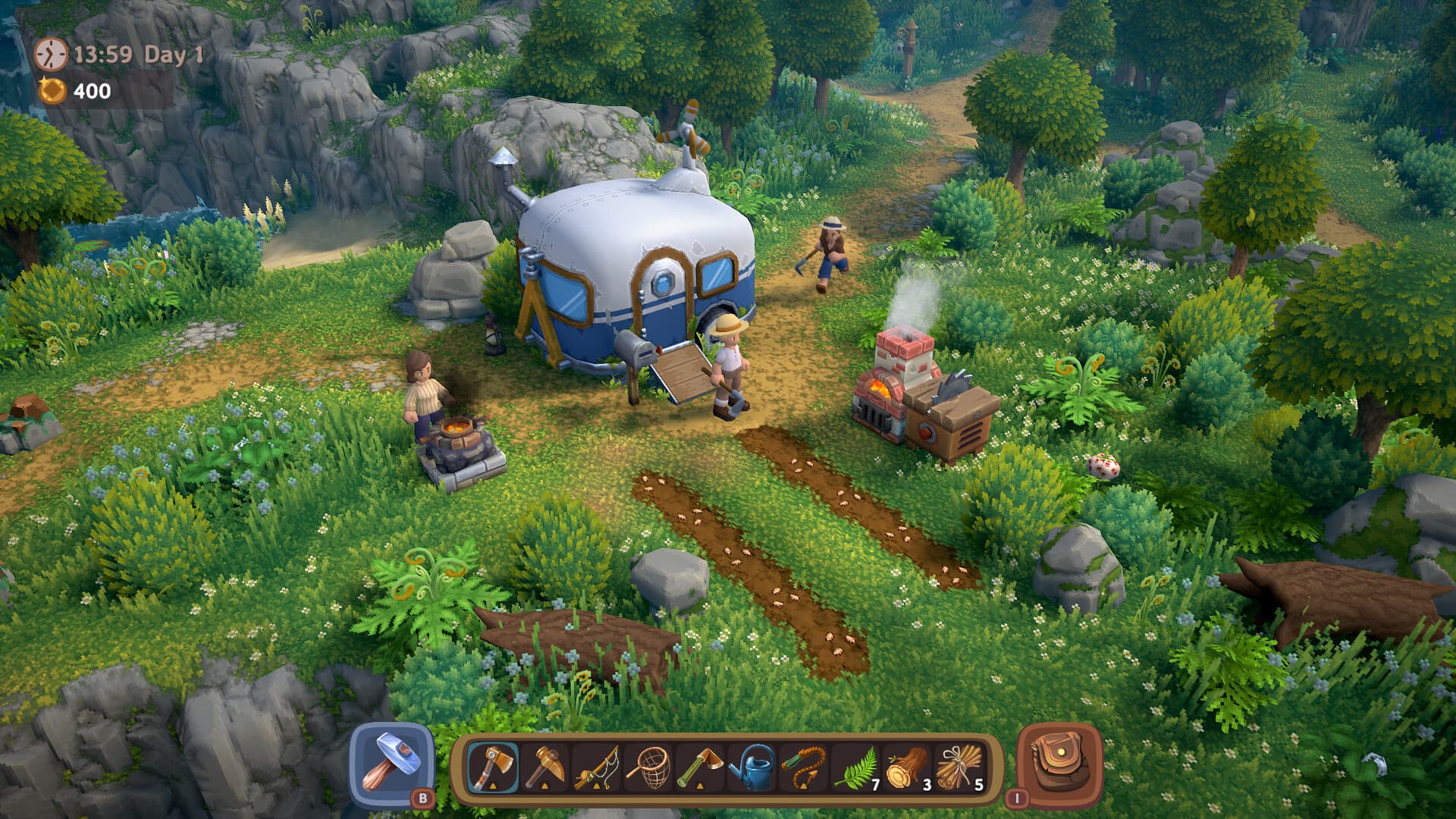
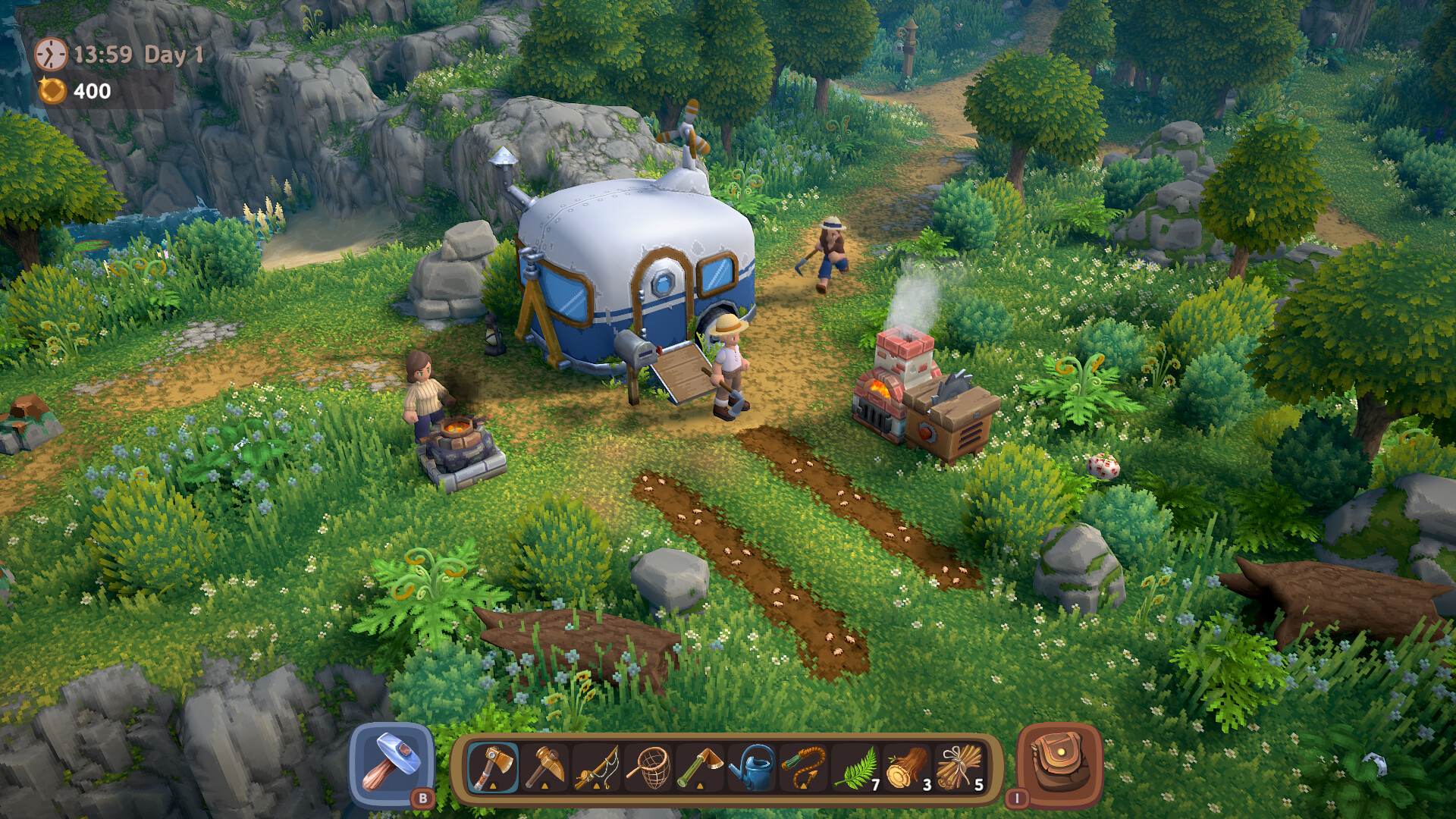
Luma Island launched quietly in November 2024, won the Dutch Game Awards for Best Debut Game, and kept growing through 2025. Here is an honest look at why this small indie farming RPG deserves more attention than it gets.
Most cozy games make the same promise. Farm some crops, meet some villagers, maybe fish a little, sleep when the game tells you to. The loop is comforting precisely because it never surprises you. Luma Island makes a different offer. It keeps the warmth and loses the restrictions, and the result is something that feels genuinely freeing in a genre that often mistakes limitation for charm.
Feel Free Games is a small indie studio based in the Netherlands. Luma Island is their first game. It released on November 20, 2024, launched with overwhelmingly positive reviews, won Best Debut Game at the Dutch Game Awards 2025, and continued growing through a major content update in 2025 called the Pirates update. For a debut title from a studio nobody had heard of, that trajectory is remarkable.
The Setup Is Simple, the Island Is Not
An earthquake has struck Luma Island and damaged the town. You arrive as a newcomer, set up a farm, and start helping the residents rebuild while uncovering the ancient druidic secrets buried across the island's four distinct regions. The story is not trying to be anything complicated. It gives you enough to care about the world and the people in it without demanding that you treat it like a novel.
What makes the island itself interesting is how much it hides. Lush forests, mountain paths, dense jungles, and after the Pirates update, a pirate cove complete with traps, skeleton enemies, and pirate-themed minigames sitting underneath the cozy surface layer. The island does not feel like a backdrop. It feels like a place with a history that predates your arrival, and uncovering that history is the slow, satisfying thread that keeps pulling you forward.
No Stamina Bar, No Forced Bedtime
This is the design decision that sets Luma Island apart most immediately from its genre peers. There is no stamina system. You do not collapse at midnight if you stay out too late. You do not burn through an energy meter that forces you to stop farming before you are ready. The game trusts you to decide when you are done for the day, which sounds like a minor quality of life choice until you have spent three hours in Stardew Valley watching your character pass out in a mine.
Exploration happens at your own pace. A full-screen map keeps you oriented across the island's regions without making navigation feel like homework. You can spend an entire session just wandering into new areas, collecting resources, and hunting for Luma eggs without any in-game system punishing you for not going home.
That freedom changes how the game feels emotionally. The cozy genre often creates low-level anxiety through its systems, a constant awareness of time passing and tasks not finished. Luma Island removes that entirely. What replaces it is genuine curiosity about what is around the next corner.
Seven Professions and You Can Change Your Mind
The profession system is the mechanical heart of the game and the thing most players talk about when recommending it. Seven distinct paths are available: Cook, Brewer, Treasure Hunter, Blacksmith, Fisherman, Jewelrycrafter, and Archaeologist. Each profession has its own progression track, its own set of tools to upgrade, and its own contribution to the town's restoration and your personal farm.
The important detail is that you are not locked in. Profession Permits are purchased at the Town Hall, which means players can switch between professions, try new ones, or eventually master multiple paths across a single save file. There is no penalty for changing direction midway through. The game encourages experimentation rather than forcing you to commit to a single identity from the opening hours.
Treasure Hunting sends you into the island's temples with traps and puzzles to solve. Archaeology uncovers the druidic history of the island through dig sites and artifact identification. Brewing and cooking build out the farm's production side, turning raw crops and gathered ingredients into finished goods. Blacksmithing feeds into tool upgrades that make every other profession more efficient. The paths feed into each other without requiring you to do everything at once.
The Lumas Are Real Companions
The magical creatures the game is named after are not purely decorative. Lumas hatch from eggs found across the island, each with unique abilities that actually change how exploration works. Some Lumas can sniff out hidden treasure nearby. Others have abilities that help in combat or resource gathering. You can pet and feed them in exchange for crafting materials, and they follow you around the island while you work.
The game is honest that the Lumas could have more depth. The bonding system is lighter than the creature-companion mechanics in games that centre entirely on that loop. But as a layer of personality woven through the broader experience, they work. Finding a new egg and waiting to see what hatches never stops being a small moment of genuine delight.
Combat exists in the game through spider enemies in the base regions and skeleton enemies introduced in the Pirates update. You fight with a whip, which is both practical and has the right amount of absurdity for a game that never takes itself too seriously. For players who want to avoid spider imagery entirely, the game includes a toggle to remove them.
Four Player Co-op Changes Everything
Luma Island launched with full four-player online co-op from day one. This is not a feature bolted on after the fact. The game was designed with cooperative play in mind, and the way professions divide naturally across a group reflects that. Four players each specialising in different paths turns the island into a collaborative project rather than a solo grind, and the absence of a stamina system means nobody is ever waiting on a friend to rest before continuing.
Steam Deck support was verified at launch, which makes it a legitimate handheld option for players who want to drop into the island during commutes or without sitting at a desk.
What the Pirates Update Added
The 2025 Pirates update expanded the game significantly beyond its launch state. A newly accessible pirate cove opened up a fourth major exploration area. Skeleton enemies added a new combat layer with different behaviours from the spiders in the base game. Pirate-themed minigames built into the temple structures gave the endgame a distinct flavour from the rest of the island. Maritime lore woven into the new area deepened the world's history in a direction nobody expected from a farming sim.
The update was free for existing owners and pulled back players who had completed the base content but wanted a reason to return. That kind of post-launch support from a debut studio is worth noting.
Who This Game Is For
Luma Island sits at a specific intersection: it is a cozy game for people who find most cozy games a little too shallow. If you want pure relaxation with no challenge at all, there are gentler options. If you want a demanding RPG that requires systems mastery, this is too light for that. The sweet spot the game occupies is meaningful exploration, satisfying profession progression, and cooperative play, all wrapped in a visual style that is genuinely pretty without trying to look like anything other than itself.
It costs twenty dollars. It launched complete, it got a substantial free update, and it won an award for best debut game in its home country. For an indie first release, that is a clean record.

Written by
kio
Hello, good to see you here.❤️
daddykio@proton.me
Stay in the loop
Get the latest gaming news and reviews delivered to your inbox. No spam, unsubscribe anytime.