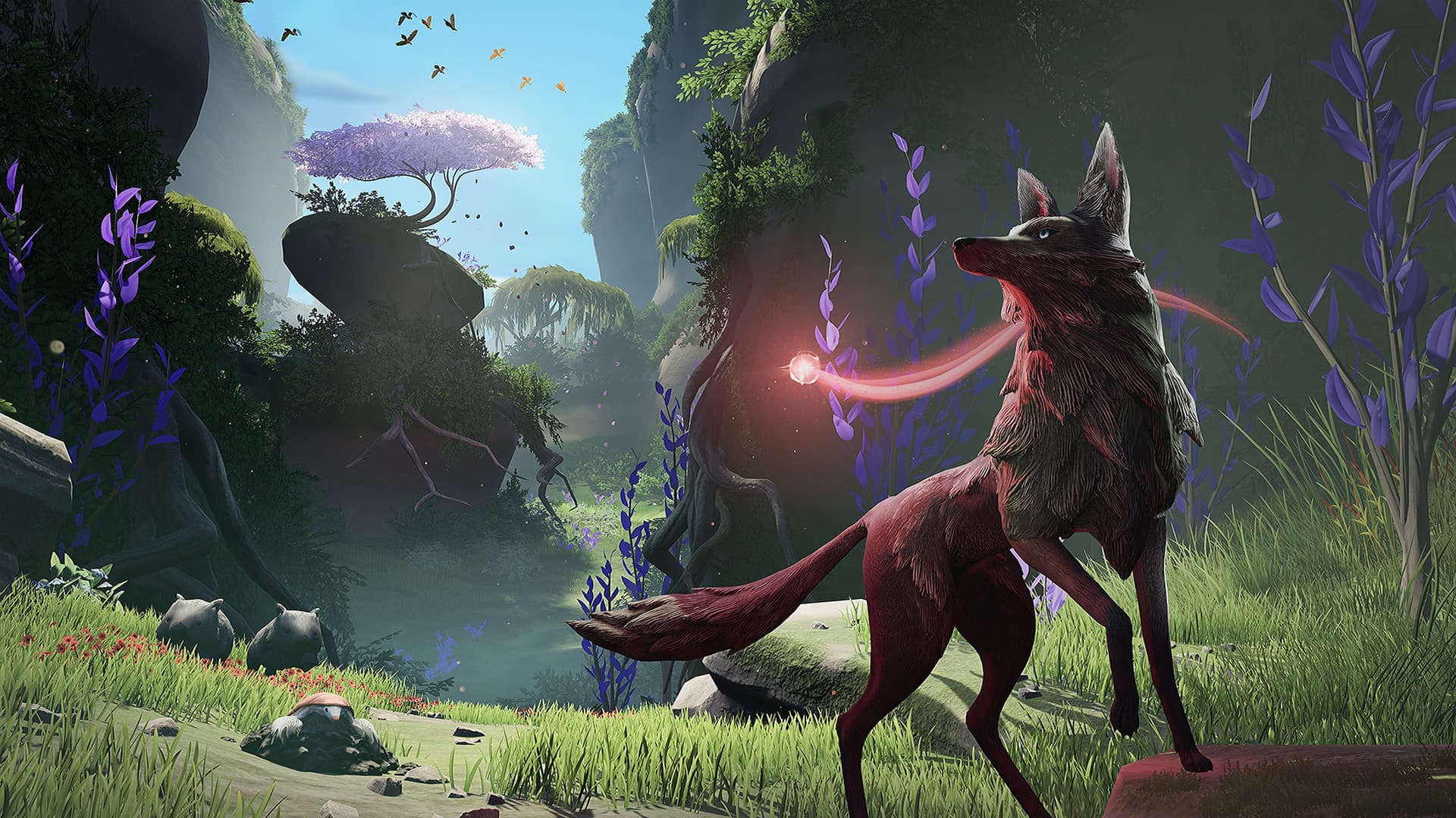
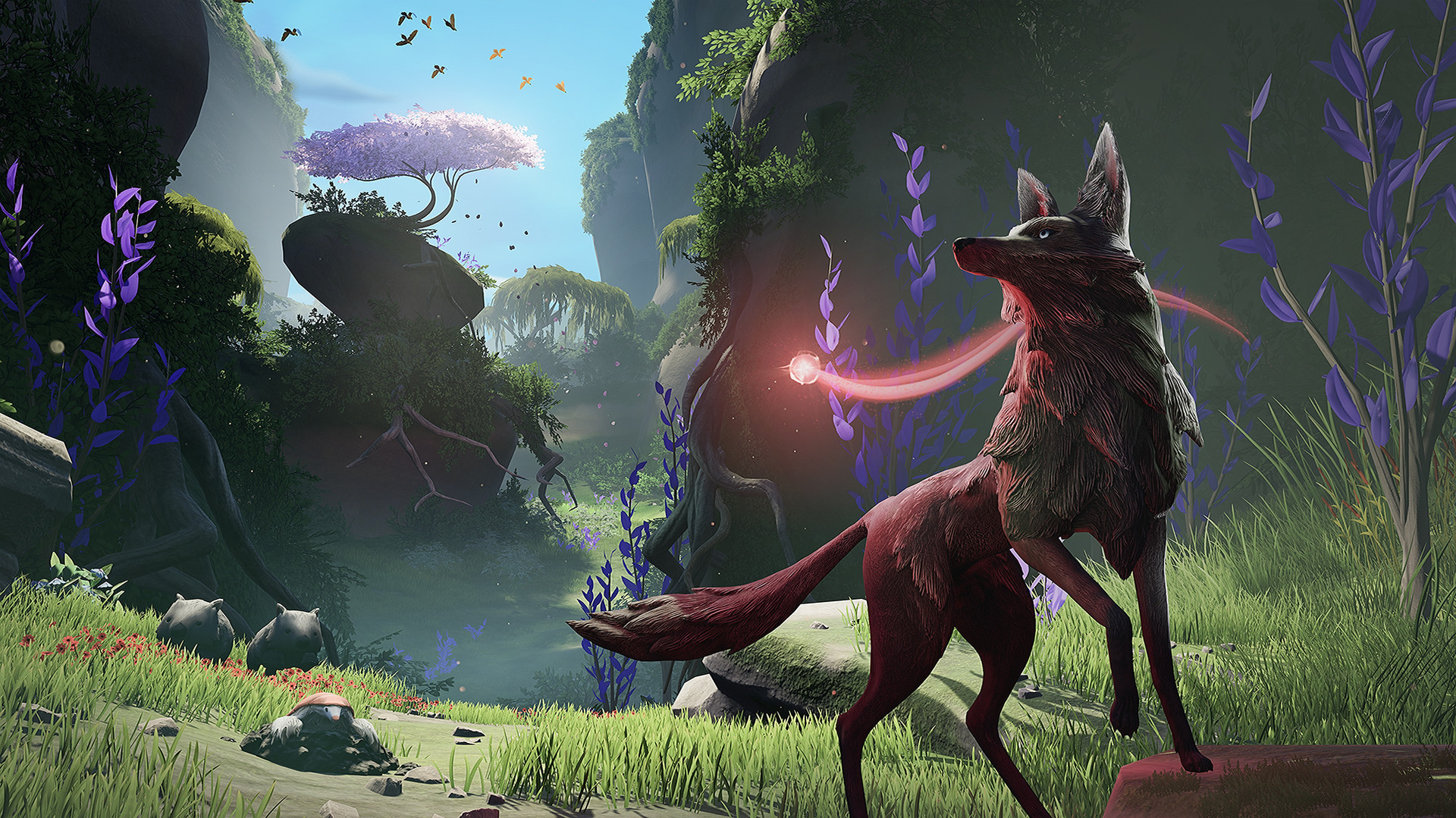
Lost Ember came out in 2019 with no combat, no enemies, and no stamina bar. Just a wolf, a glowing spirit, and the ability to become any animal you see. It is still one of the most quietly affecting games ever made.
There is a moment early in Lost Ember where you are walking as a wolf through tall grass and you notice a worm on the ground. You already know you can possess birds, fish, and larger animals. You try the worm anyway. It works. You spend thirty seconds moving at almost zero speed through the dirt for absolutely no reason, and somehow it is one of the most charming things the game does.
That moment tells you everything about what Mooneye Studios was going for. They made a game where possessing a worm serves no mechanical purpose and they included it anyway because a world where you cannot become a worm felt incomplete.
Lost Ember released on November 22, 2019. It runs for around six hours. It has no combat, no enemies worth fearing, no stamina system, and no fail state worth mentioning. By the metrics most people use to evaluate whether a game is worth playing, it barely registers. And yet people who played it years ago still bring it up when conversations turn to games that actually meant something.
The Story Is Doing More Than It Appears
You are a wolf travelling through the ruins of an ancient civilisation called the Yanrana alongside a spirit, a glowing orb who speaks and believes that the wolf is actually a reincarnated member of the people who built the crumbling world around you. Neither of them remembers what happened. Neither remembers who they were. The goal is the City of Light, a mythical destination where the dead are supposed to finally rest, and the journey there slowly unspools the truth through recovered memories scattered across the landscape.
The memories arrive as small cinematic scenes, fragments of a past that gradually explain why the Yanrana are gone and why these two souls never reached where they were supposed to go. The story carries heavy themes about blind loyalty, the violence that institutions can demand of ordinary people, and the price of choosing obedience over conscience. It does not hide what it is saying. Some players find the messaging a little direct. Others find that directness exactly right for a game this short, where there is no room to be subtle without losing the thread entirely.
What holds it together is the relationship between the wolf and the spirit. The tension that builds between them as the truth of the past becomes clearer is where the writing earns its weight. By the end the story has made you care about two characters who, on paper, are a wolf and a talking ball of light.
Becoming Other Animals Is the Whole Game
The wolf is your default form, but you spend much of the game as something else entirely. Any animal you see can be possessed by looking at it and pressing a single button. You leave the wolf behind temporarily, control the new creature for as long as you like, and return to wolf form when you are ready. The possessed animal is left unharmed.
Each creature moves differently and perceives the world differently. Fish swim through underwater tunnels that the wolf cannot reach, opening passages to new areas. Birds carry you over cliff faces and to high ledges unreachable from the ground. Wombats roll into tight underground spaces and squeeze through gaps in rock. Mountain goats pick routes up sheer surfaces that no other animal could navigate. The animals are not just different skins on the same movement system. Each one genuinely changes what you can access and how you read the terrain around you.
Some animals are deliberately useless and that is the point. A sloth moves at a pace that makes traversal almost meditative. Armadillos eat turnips for no benefit. Elephants suck up water and spray it with their trunks because the option is there and the developers wanted it there. The game calls these Silly Things and treats them as a feature rather than a quirk. It is a design philosophy that trusts players to find joy in things that do not reward them mechanically, which is rarer in games than it should be.
The World Earns Exploration
Lost Ember moves through distinct biomes across its chapters: open grasslands, dense forests, desert ruins, mountain passes, and river systems. Each region has its own visual character and its own animal population, which means the creatures you can possess change as the environment changes. Getting to a new biome is partly an exercise in seeing what animals show up and immediately wanting to try all of them.
The ruins of the Yanrana are woven through every region. Crumbled architecture, moss-covered statues, flooded chambers that were once city streets, the sense that something large and fully realised existed here before it fell apart. The world does not explain itself through text descriptions or collectible lore entries. It asks you to look at what remains and draw your own conclusions while the story feeds you the context gradually.
There are hidden collectibles scattered across each area for players who want a reason to wander beyond the main path. Finding them does not unlock anything dramatic, but searching for them extends your time with each biome and rewards the kind of patient, curious exploration that the game is fundamentally built around.
What the Game Asks of You
Lost Ember has no enemies that can kill you in any meaningful sense. Falling too far respawns you within seconds with no penalty. The game is explicitly not interested in testing your reflexes or your patience for difficulty. What it is interested in is whether you are willing to slow down long enough to pay attention.
That is a genuine ask in 2024 and beyond, where most games justify their runtime through systems and challenge. Lost Ember justifies its six hours through atmosphere, through the cumulative weight of the memories you collect, and through the specific pleasure of moving through a world as a creature that has nothing to do with human movement. Swimming along a riverbed as a fish, following the current through an underwater canyon while light filters down from above, is one of those experiences that does not map onto any other game because almost no other game bothers to build it.
The story lands harder for some players than others depending on how directly you connect with its themes. The twist at the centre of it is not difficult to anticipate if you are paying attention. Whether that diminishes or strengthens the ending is something players tend to disagree on.
Worth Playing in 2026
Lost Ember is available on PC, Xbox, PlayStation, and Nintendo Switch. It regularly appears in sales at well under its original price. At current discounted rates it is one of the better value propositions in the cozy and narrative game space, not because it is cheap but because what it delivers within six hours is something a lot of longer games never manage.
If you have been looking for a game to give someone who does not normally play games, or a game to play yourself on a quiet afternoon without committing to a thirty hour campaign, this is consistently one of the best answers to that question. It is the kind of game that makes you think about it a week later when you are not playing anything, which for a six hour indie from 2019 is a more lasting achievement than most.

Written by
kio
Hello, good to see you here.❤️
daddykio@proton.me
Stay in the loop
Get the latest gaming news and reviews delivered to your inbox. No spam, unsubscribe anytime.