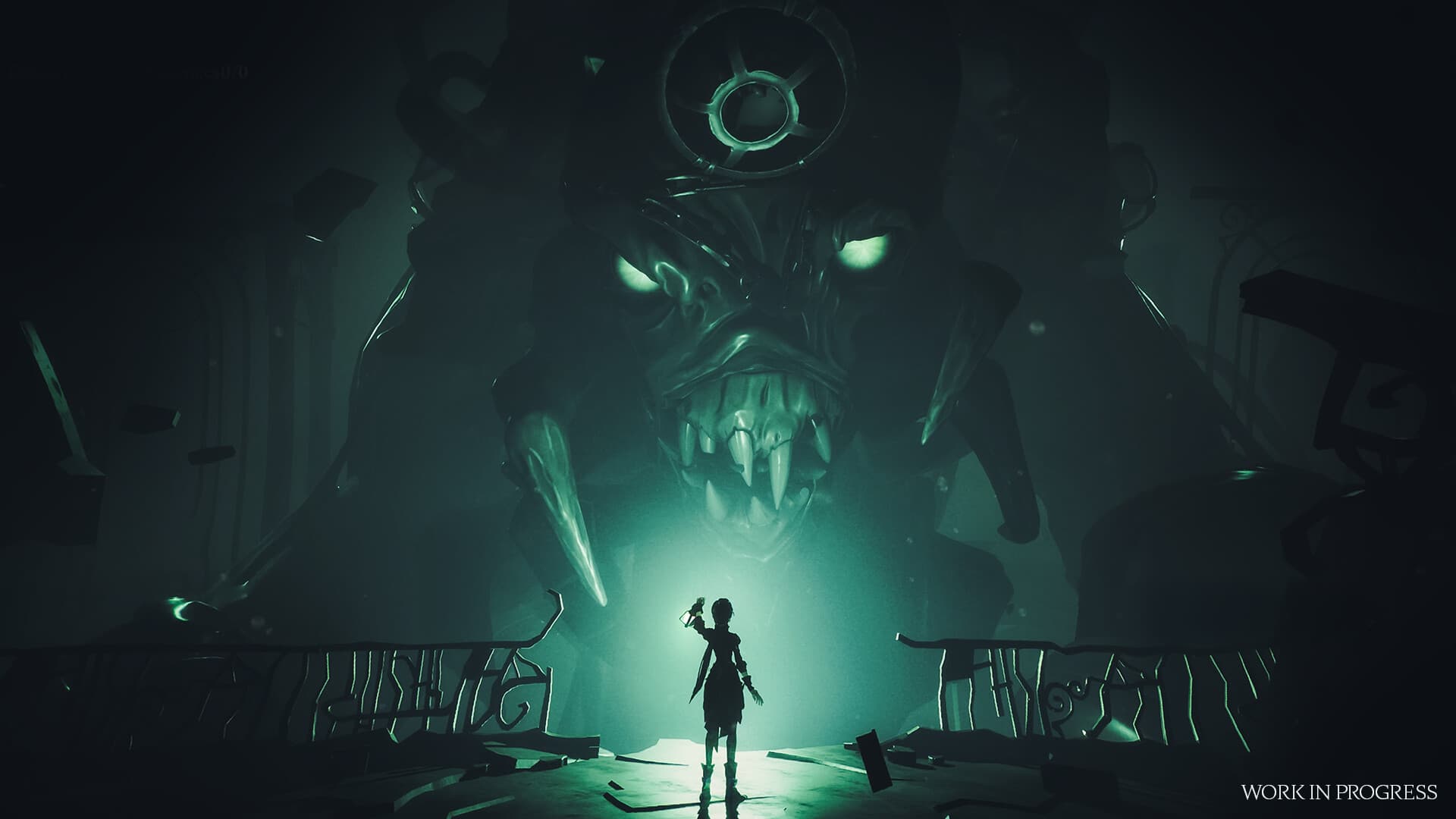
Koshmar The Last Reverie was shown at Summer Game Fest 2026. Violet enters other people's nightmares and her sanity shapes everything. Here is why this is worth watching.
Alice: Madness Returns came out in 2011 and left an audience that never quite found another game that scratched the same itch. Dark fairy tale logic. A protagonist whose grip on reality was the central gameplay variable. Combat that felt like it was happening in a mind rather than a space. Spicy Pony made something genuinely singular and then went quiet, and the genre never fully replaced what it left behind.
Purple Ray Studio, a seventeen-person team based in Krakow with Resident Evil and The Witcher veterans on staff, announced Koshmar: The Last Reverie in April 2026 and showed new gameplay at Summer Game Fest today. The Alice comparison is not a criticism dressed as a compliment. It is the most direct line to what this game is attempting, and based on everything shown so far, Purple Ray Studio understands why that comparison lands and has built something with its own identity inside that framework.
Violet and the City of Radwan
She is a mortician's daughter. Raised among cadavers, feared by the living, fluent in death in the way that only someone who grew up inside it can be. Radwan, the fictional dieselpunk city she inhabits, sits somewhere in a central European alternate history where the aesthetics of Victorian society have been pushed through an industrial nightmare filter. Blue-collar outskirts, factory districts, rooftops connecting districts that do not connect at street level, hidden passages running through the underbelly of a city that has more going on beneath it than its inhabitants acknowledge.
When the sleeping plague hits Radwan, it does not simply put people to sleep. It pulls them into nightmares they cannot escape. Most of the city does not know this is happening because the people who would tell them are asleep. Violet knows because she can see it. She is a lucid dreamer who can enter other people's nightmares, which in a city being consumed by a supernatural sleeping plague makes her the only person positioned to do anything about it.
That is not a comfortable position. It is a specific kind of loneliness that the game uses as the emotional foundation for everything built on top of it.
Two Worlds, One Sanity Bar
The dual world structure runs through every system in the game. In Radwan's physical reality, Violet explores districts, interacts with survivors, takes on side quests, and makes choices that ripple outward in ways the game tracks carefully. In the nightmare realm, she fights through procedurally generated Nightmare Rifts, each one shaped by the psychology of the sleeping person whose nightmare she has entered.
The sanity system is what makes those two halves feed into each other meaningfully. Every choice Violet makes in the physical world, every dialogue option, every moral decision about stealing or donating or keeping something she finds, every combat approach she takes in the nightmare realm, shifts her sanity in one of two directions. Dream-inspired choices push her toward comforting delusions. Nightmare-inspired choices drag her deeper into madness.
Neither direction is framed as correct. Both unlock different abilities, change her physical appearance in ways that other characters react to visibly, and push the narrative toward different endings. The creative director described the system as giving players agency over who Violet becomes rather than what she does, which is a meaningful distinction for a game where the protagonist's mental state is the central resource being managed.
The gameplay trailer shown at Summer Game Fest ended with a glimpse of Violet fully lost to madness, a design that looked nothing like the composed teenager at the start of the same trailer. That transformation being visible rather than just numerical is the design decision that makes the sanity system feel like part of the story rather than a UI element.
The Combat and Why It Works for This Game
Fast, precise, dance-like is how the developers described Violet's movement in combat, and the footage supports that framing. She fights with dream weapons and nightmare weapons, each unlocking different resource types that feed back into the two-directional sanity system. Equippable items change her stats and support different builds, aggressive or defensive, which gives the combat system enough depth to sustain variety across a full campaign without requiring the kind of mechanical complexity that pushes genre newcomers away.
Dynamic difficulty scaling adjusts to player progression, which alongside multiple difficulty options keeps the experience accessible without removing the challenge that makes the nightmare aesthetic feel earned. Precise timing and environmental awareness are the core skills the combat demands, which fits a protagonist who is literally fighting inside other people's psychological states.
Purple Ray Studio is targeting a 2027 release on PC via Steam and unspecified consoles. The Steam page is live now. The Women-Led Games Showcase slot at Summer Game Fest gave it its widest audience yet, and the reaction from people seeing the gameplay for the first time has been considerably warmer than a game of this size usually generates at announcement stage.

Written by
kio
Hello, good to see you here.❤️
daddykio@proton.me
Stay in the loop
Get the latest gaming news and reviews delivered to your inbox. No spam, unsubscribe anytime.