Hinokami Chronicles 2 launched August 5, 2025 covering three story arcs with 40 plus characters. Here is whether CyberConnect2 delivered on the sequel.
The first Hinokami Chronicles sold over three million copies. That number says less about the game itself and more about the timing. Demon Slayer was the biggest anime in the world when it launched in 2021, and the game rode that wave with a competent if unspectacular adaptation. Four years later, CyberConnect2 came back with more arcs, more characters, and a fundamentally similar structure. Whether that is enough depends entirely on what you wanted from the first game and whether you still want more of it.
Hinokami Chronicles 2 launched August 5, 2025 across every major platform and fills in the story gap the first game left behind. Entertainment District, Swordsmith Village, and Hashira Training arcs are all here. If you watched the anime and wanted to play through those moments, the game does exactly that.
What the Story Mode Covers
The game picks up where the first entry ended, following Tanjiro through the Entertainment District arc alongside Tengen Uzui and the Sound Hashira operation against Upper Rank Six demons Daki and Gyutaro. From there it moves into Swordsmith Village, where Muichiro Tokito and Mitsuri Kanroji each get their own focused story segments fighting Upper Rank Five Gyokko and Upper Rank Four Hantengu. The Hashira Training arc closes out the campaign, serving as the bridge toward the Infinity Castle content that the DLC has been steadily expanding.
CyberConnect2's approach to adapting anime has always leaned heavily on recreating specific scenes from the source material rather than building original narrative around them. Hinokami Chronicles 2 is no different. Key moments from each arc are present, recognisable, and faithfully rendered. The pacing between those moments is where the game shows its limitations. Exploration sections connect combat encounters in ways that feel thin compared to the weight of the scenes surrounding them.
For fans who have already watched every arc multiple times, the story mode functions as an interactive replay of familiar content. For anyone who has not seen the anime and is coming to the story through the game first, it works as a surface-level introduction that will almost certainly send them to the source material for the full picture.
The Combat and What Is New
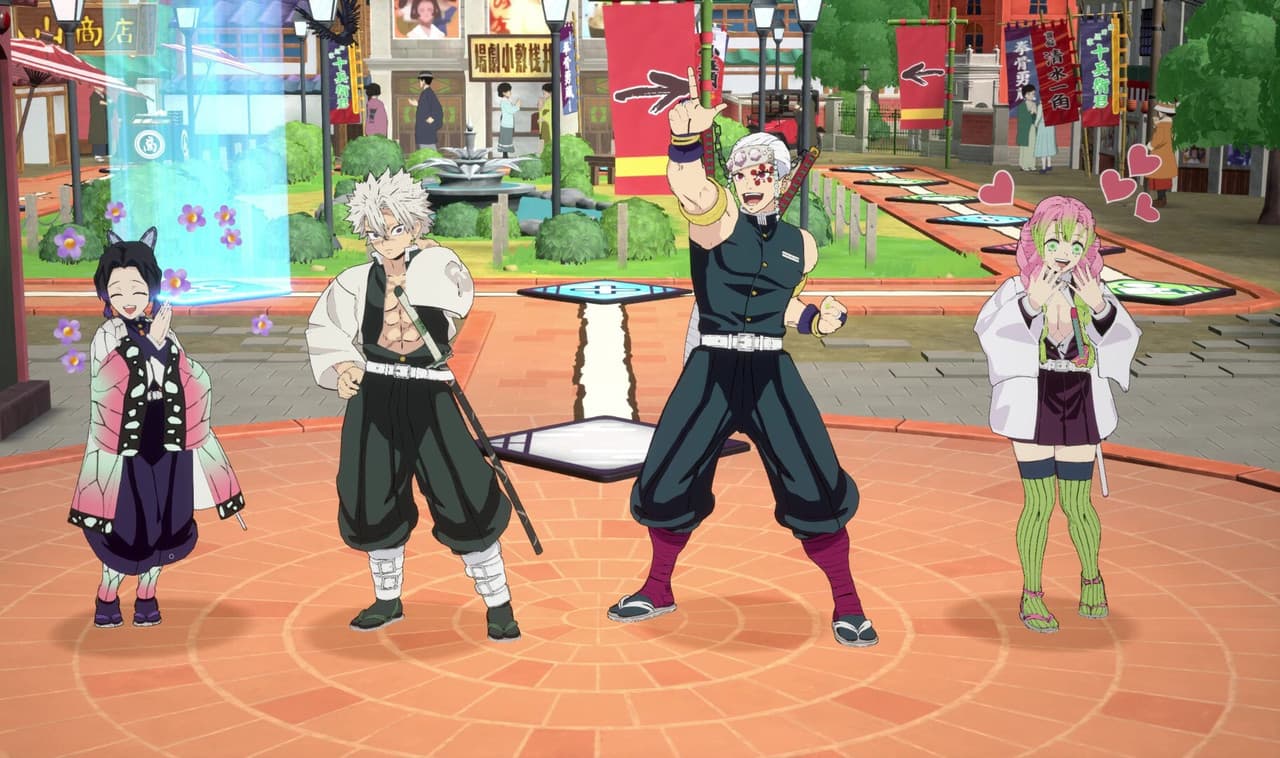
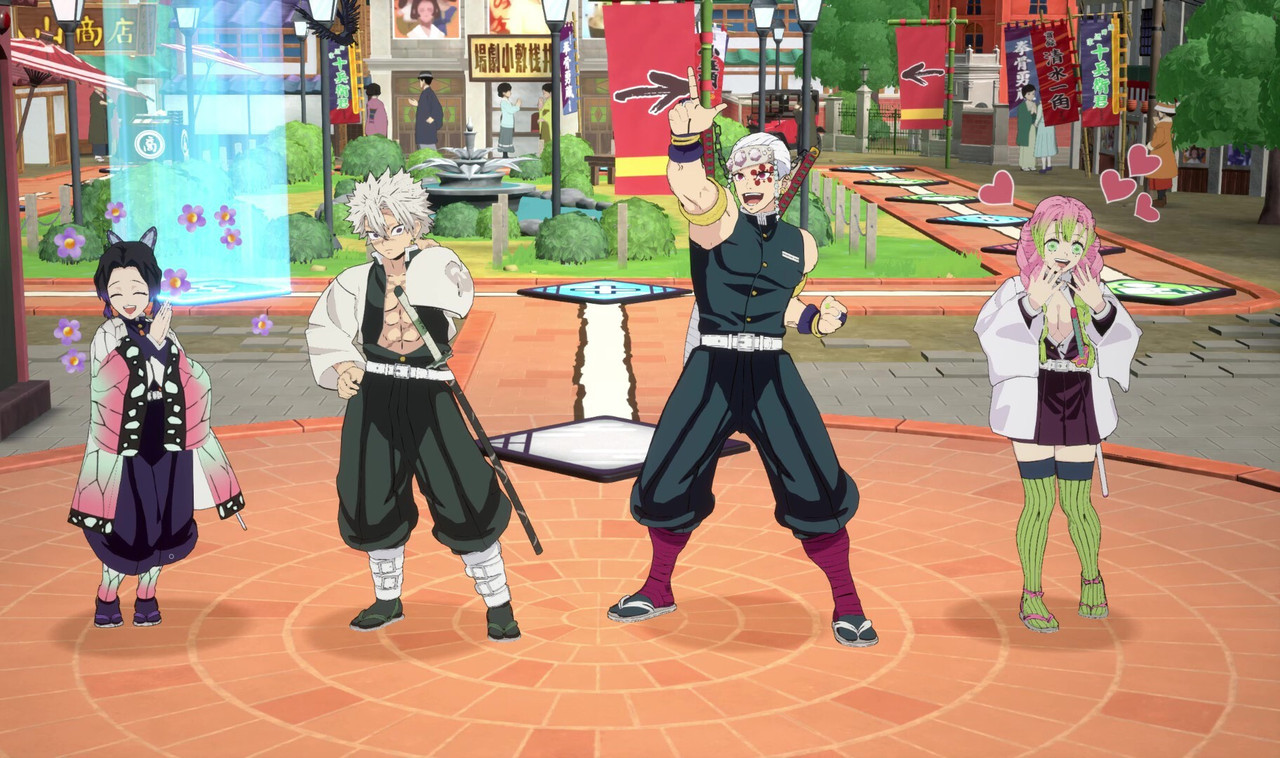
VS Mode is where Hinokami Chronicles 2 justifies its existence most clearly. The roster sits at over 40 characters at launch, including all nine Hashira, which is the headline feature the game was marketed on and delivers exactly as advertised. Muichiro, Mitsuri, Tengen, Gyomei, Sanemi, Obanai, Shinobu, Giyu, and Rengoku are all fully playable with their own move sets built around their individual breathing styles.
Two new systems change how matches play out. Dual Ultimates trigger cooperative finishing attacks when two specific characters are paired together, creating a roster-building incentive that rewards learning character combinations rather than defaulting to whoever you find easiest to control. The Gear system adds equipment options that adjust individual character stats and create light build diversity within the VS Mode framework.
Online and offline play are both present, with ranked matchmaking, casual lobbies, and local versus covered. The rollback netcode situation has been a consistent complaint from the fighting game community since the first entry, and Hinokami Chronicles 2 has not resolved that concern to the satisfaction of players who take competitive online seriously.
The DLC Situation
The Infinity Castle Part 1 Character Pass adds seven characters tied to the recently released film, including Doma, Kaigaku, and Infinity Castle versions of Tanjiro, Zenitsu, Giyu, Shinobu, and Akaza. Doma, the seventh and final character in this pass, arrives May 28, 2026. The characters are VS Mode additions rather than story content, which keeps the DLC clearly separated from the base game campaign.
For players who purchased the Character Pass, the rollout has been steady with new characters arriving roughly every four to six weeks since launch. The Infinity Castle film connection gives the DLC genuine relevance rather than feeling like content pulled from the base game.
Who It Is For
Hinokami Chronicles 2 is a Demon Slayer game built for Demon Slayer fans. It does not try to be a competitive fighting game that competes with the genre's technical heavyweights, and it does not try to be an action RPG that rivals games built around open world exploration. It is an accessible, visually faithful adaptation of three beloved story arcs with a large roster and enough competitive depth for casual to intermediate players to find longevity in.
Steam reviews sit at 83 percent positive. That score reflects a game that delivered on its specific promise to the audience it was made for, without stretching toward anything it was not designed to be.
Available on PS5, PS4, Xbox Series X and S, Xbox One, Nintendo Switch, and PC.

Written by
kio
Hello, good to see you here.❤️
daddykio@proton.me
Stay in the loop
Get the latest gaming news and reviews delivered to your inbox. No spam, unsubscribe anytime.