Crimson Desert launched March 19, 2026 after six years of development and multiple delays. Here is an honest look at whether Pearl Abyss delivered.
Six years is a long time to wait for a game. Crimson Desert was first shown in 2019, reintroduced with a full gameplay reveal in 2020, slipped past a 2024 window, missed late 2025, and finally landed on March 19, 2026. Pearl Abyss spent those years rebuilding what was originally planned as a Black Desert Online prequel into a completely standalone single-player title. The question that followed every delay was the same one: is it actually going to be worth it?
The Steam reviews are sitting at 86% positive across nearly 57,000 English-language reviews. That number answers part of the question. The rest requires a closer look at what the game is and what it is not.
The World of Pywel
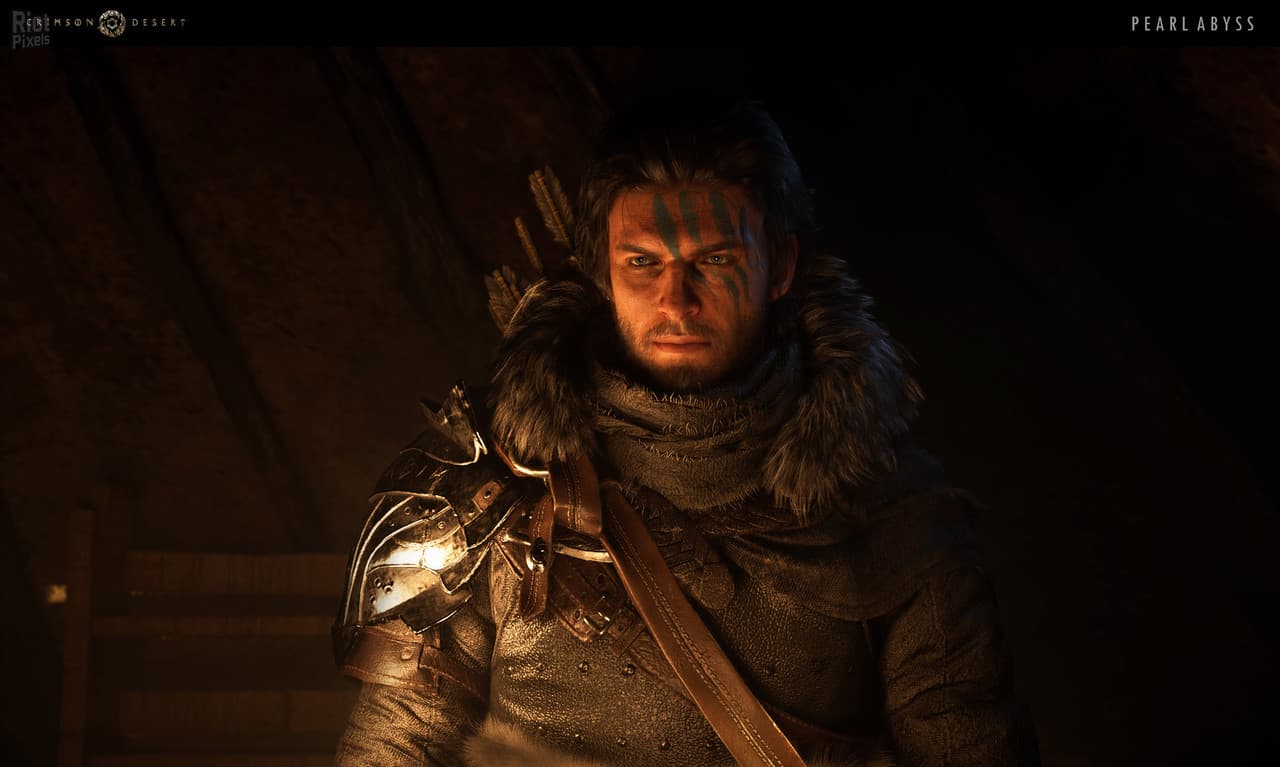
Crimson Desert is set on the continent of Pywel, a medieval fantasy world that carries the visual ambition Pearl Abyss put into Black Desert Online and scales it up for a single-player narrative experience. You play as Kliff, a mercenary leader whose goal is rebuilding the Greymane faction while navigating a land fractured by rival factions, magical monsters, and a looming threat that grows larger as the story advances.
The world spans multiple distinct environments. Vast wilderness opens into dense forests, ruins, cities with their own political structures, and a region called the Abyss that operates by different rules from everything surrounding it. Pearl Abyss built Crimson Desert on their proprietary BlackSpace engine, and the environmental detail it produces is among the best looking open worlds in current-generation gaming. The scale feels earned rather than empty.
Kliff is not a silent protagonist and not a character you build from scratch. He has a history, relationships, and a personality that drives the story's decisions. That approach commits Crimson Desert to a specific narrative identity rather than the blank-slate RPG structure most Western open world games default to. Whether that lands depends on how much you connect with Kliff across the campaign's runtime.
How Progression Works
The game has no traditional level system. You do not earn experience points and allocate stats. Progression instead runs through exploration, combat, and crafting. Discovering hidden areas unlocks new weapons and abilities. Defeating bosses lets you claim their weapons or armour. Upgrading equipment at a Blacksmith improves your capabilities. The primary progression currency is Abyss Artifacts, which grant base improvements to health, stamina, and damage output.
This structure rewards players who explore thoroughly and engage with every system rather than those who follow the main quest path as directly as possible. It also means the game's difficulty curve responds to how you play rather than your willingness to grind. Players who push into the open world find themselves better prepared for main story encounters. Players who stay on the critical path feel the resistance more sharply.
There is a single difficulty setting. That is a real limitation for players who want more control over the challenge level, and it will frustrate both ends of the spectrum at different points.
The Combat and Where It Shines
Pearl Abyss built Black Desert Online around one of the most technically impressive action combat systems in the MMO genre. Crimson Desert inherits that DNA. Kliff's moveset is broad, fluid, and rewards investment in learning the full range of what he can do. Enemy variety across Pywel gives that moveset real application. Boss encounters are the clearest expression of how the system performs at its best, designed around reading patterns and building understanding across attempts rather than overwhelming through raw difficulty.
The combat is not a Soulslike despite being tagged as one by many players. The pacing is faster and the death penalty is far lighter. It sits closer to an action RPG in the character action tradition, demanding precision while remaining generous enough to keep the momentum of exploration intact.
Where Six Years of Development Shows
The production quality is unmistakable in the areas where Pearl Abyss had time to finish things properly. The cinematics are exceptional. The voice acting across multiple languages reflects genuine investment in the localisation. The world density, the variety of content across Pywel, and the sheer volume of things to find and do justify the open world structure rather than using it as padding.
Where the years of development show less cleanly is in tonal inconsistency across the campaign's back half, where the story pulls in directions that feel less resolved than the opening hours promise. The setup is excellent. The payoff is good but not exceptional.
Crimson Desert is not a disaster. It is a very good open world action game with exceptional production values, a combat system that rewards time investment, and a world worth exploring. Whether it is the game of the year depends on what the rest of 2026 delivers.
For now, it is absolutely worth your time.

Written by
kio
Hello, good to see you here.❤️
daddykio@proton.me
Stay in the loop
Get the latest gaming news and reviews delivered to your inbox. No spam, unsubscribe anytime.