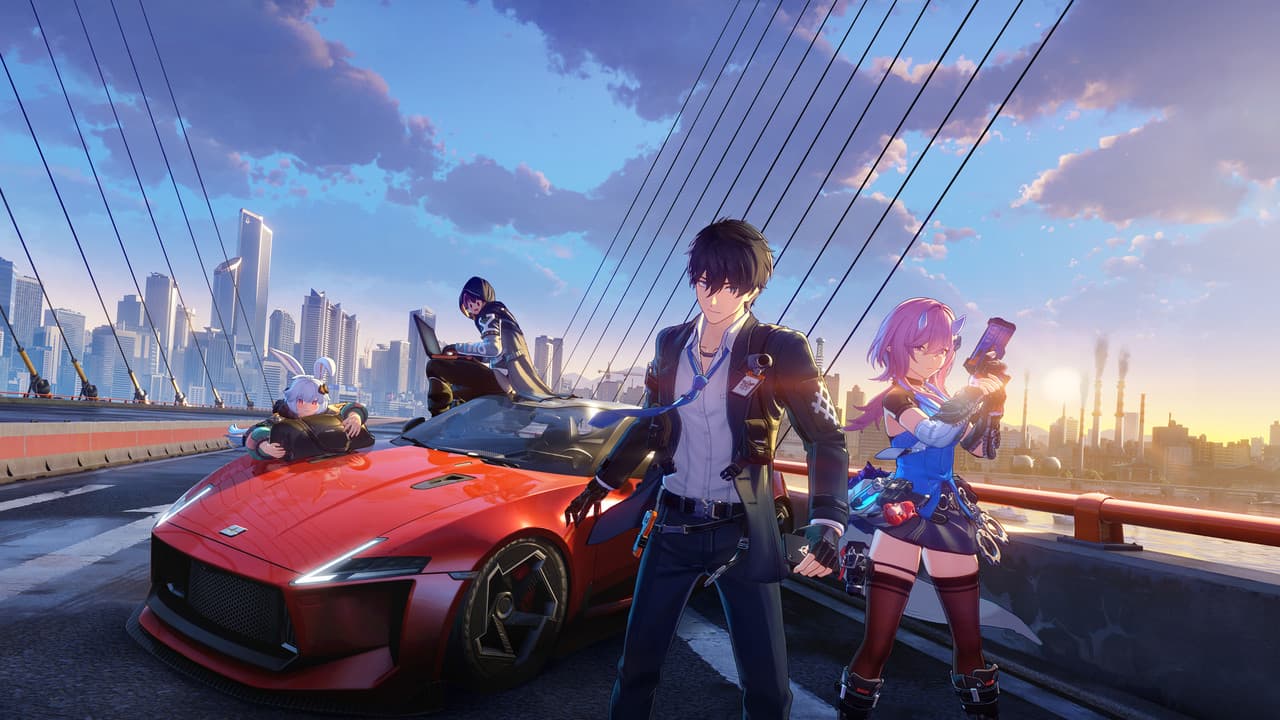
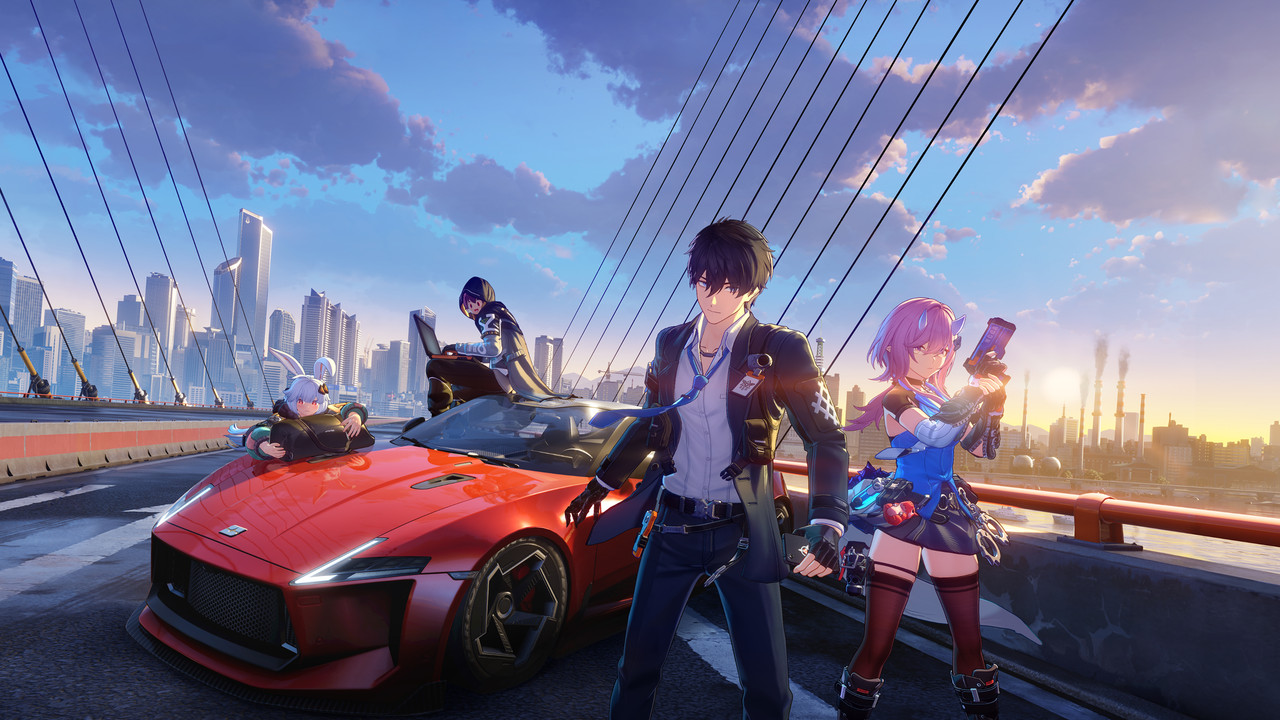
No gacha, no banners, no pity pulls. Ananta is a free to play open world RPG where every character is earned through gameplay, and it looks nothing like the games it is being compared to.
Most free to play games announce themselves with a pull rate chart and a battle pass. Ananta announced itself by showing someone swing between skyscrapers, steal a car, start a fight outside a convenience store, and then switch to a different character mid-chase to continue the pursuit from a rooftop.
It looked ridiculous in the best possible way. The game was called Project Mugen back then. The name changed. The ambition did not.
Ananta, developed by Naked Rain under NetEase, is targeting a Q3 2026 global launch, meaning sometime between July and September. No exact date has been confirmed, but a closed technical test ran in January 2026 and the reception from participants was strong enough that community consensus is pointing toward a beta test arriving soon before the full launch window.
This is one of the most unusual free to play games in development right now, and the reason is simple: it refuses to behave like one.
Nova City Is the Real Main Character
The game takes place in Nova City, a dense urban environment built to roughly the scale of Manhattan. The world operates on a full 24 hour cycle. NPCs follow realistic daily routines and react dynamically to what players do. Cause a traffic jam in one district and it ripples across the city. Start a fight and bystanders flee, call for help, or stand and watch depending on the situation.
The philosophy the developers described is straightforward: if you can see it, you should be able to interact with it. That means opening doors, playing actual basketball minigames, watching movies in theaters, checking NPCs' phones, rearranging furniture in apartments, or just causing chaos for the sake of it. The demo shown at Tokyo Game Show 2025 covered a map of roughly two by three kilometres, with the producer confirming the final version will be substantially larger, including areas accessible by plane and large bridges connecting to distant shores.
What that demo conveyed was not just scale, but density. Every block of Nova City has something to do in it. The city does not feel like a backdrop. It feels like a place.
No Gacha, No Banners, Every Character Is Free
This is the part that stopped the gacha gaming community mid-scroll when it was confirmed.
Ananta will not use a character gacha system. Every playable character in the game is obtained through story progression or organic open world encounters. You start as the Captain, the new leader of Nova City's peacekeeping force, and recruit your crew naturally as you play. No banners. No pity counter. No limited time pulls that disappear in two weeks.
The producer explained the reasoning directly: a gacha model creates pressure to constantly push new characters at the expense of existing ones, diminishing every character that came before the latest release. The team wanted every character to remain relevant for the entire lifespan of the game, with their own storylines, their own daily lives in the city, and their own role in the ensemble.
Monetisation instead sits entirely on cosmetics. Outfits, vehicles, house decorations, and similar customisable elements are what the game sells. Characters themselves cannot be purchased at all.
For a free to play title entering a market dominated by gacha games, this is a significant structural bet. The producer put it plainly: if the game is genuinely good, players will support it.
How the Combat and Traversal Work
Each character in Ananta brings a completely different way of moving through and fighting in the city. You can swing between buildings with a grapple system, freerun across rooftops, skate through streets, and switch between characters mid-activity the same way GTA V handles its protagonist swapping. While you are playing as one character, the others continue living their lives independently in the city, creating emergent situations you can stumble into when you swap over.
Combat supports switching between up to four characters during a fight, each bringing distinct abilities, traversal tools, and buff synergies. Team composition matters in boss encounters in a way that rewards understanding each character's strengths rather than simply levelling up whoever looks strongest.
Among the characters confirmed so far are Captain, the versatile protagonist; Taffy, a fast character built for traversal and aggressive combat; Richie, described as a raw power dealer; and Seymour, who operates from a mobile RV and uses gadgets and tracking abilities to hunt targets across the city rather than overpowering them. Each character has a personal storyline inside Nova City, and multiple storylines intersect and converge as the game progresses, building what the developers described as a grand ensemble drama told from several perspectives at once.
Where It Stands Right Now
Pre-registrations are open across all platforms and have surpassed 11 million globally. The game is confirmed for PC, PS5, Android, and iOS, with cross-platform play supported. The January 2026 technical test covered core gameplay systems and the response from participants pointed to the mechanics holding up well in actual play rather than just looking good in directed trailers.
The Q3 2026 target puts Ananta in the same seasonal window as several other major releases, but its combination of a no-gacha model, a living city simulation, and a free to play price point gives it a profile that does not directly compete with anything currently in the market.
If the full game delivers on what the demos have shown, Ananta will not just be a good free to play game. It will force the conversation about what free to play games are allowed to be.

Written by
kio
Hello, good to see you here.❤️
daddykio@proton.me
Stay in the loop
Get the latest gaming news and reviews delivered to your inbox. No spam, unsubscribe anytime.